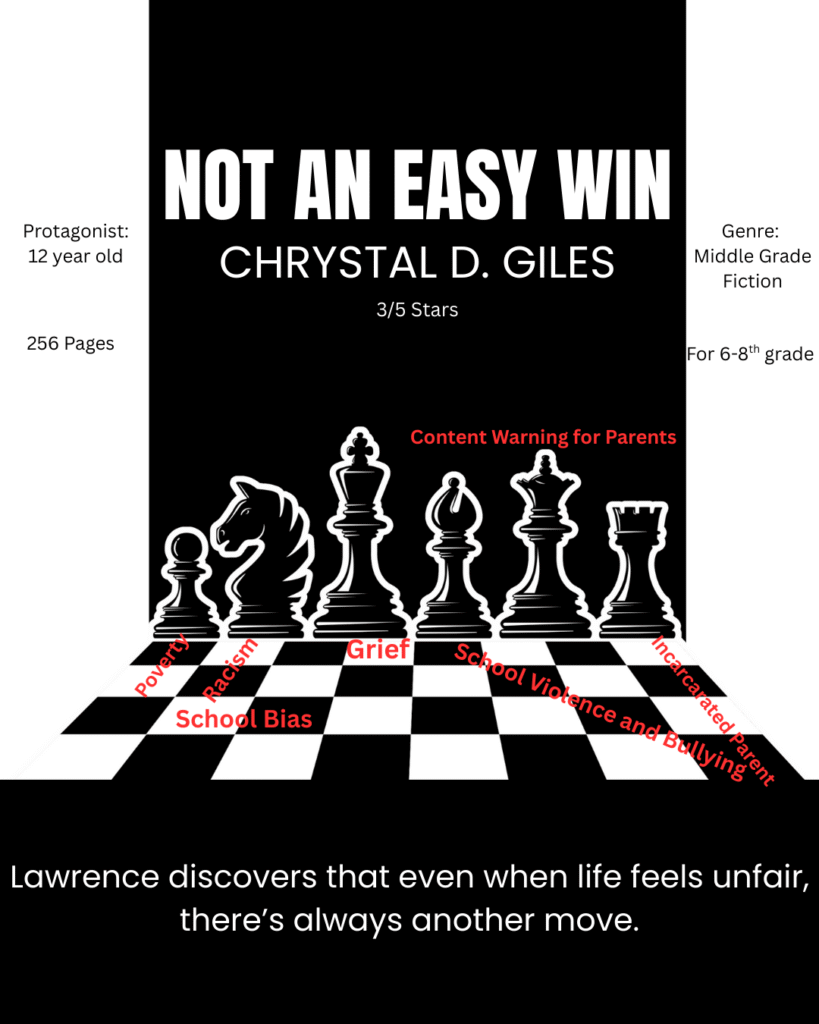
In Not An Easy Win, twelve-year-old Lawrence has had a rough year. He’s had to move in with his granny after leaving Charlotte, he’s been expelled for a fight he didn’t start, and his dad has been gone for months with no explanation. With school off the table for now, Lawrence ends up spending his days at the local rec center, where a neighbor runs a chess program.
Lawrence knows nothing about chess, but something about the board and the people around it feels right. When a tournament in Charlotte is announced with prize money for first place, Lawrence begins to wonder if this might be his way back home. Along the way, he learns about forgiveness, resilience, and how to make thoughtful choices when life feels rigged against you.
What Worked
- A relatable, heartfelt main character – Lawrence’s frustration, fear, and loneliness feel very real. His voice reads authentically middle school, and many kids will see themselves in his search for structure and purpose.
- Important themes handled with care – The book addresses institutional racism, poverty, violence in schools, incarcerated parents, and finding a safe hobby/outlet. These topics are woven into the story without ever becoming preachy. They feel true to Lawrence’s world and experiences.
- A meaningful message – At its core, this book is about second chances and building self-worth—big themes for middle school readers who often feel misunderstood or judged too quickly.
What Didn’t Work
- A very abrupt ending – The story ends without real closure. We never get answers about Lawrence’s dad, and the book skips the emotional moments that seemed set up earlier, like the chance for Lawrence to finally play a real chess match against his mentor. It feels like a missing final chapter.
- Predictable storyline – The plot follows a familiar middle grade structure: a struggling boy finds his footing through a new hobby and community. Although it is done well, it doesn’t stand out among similar titles.
- Not enough chess – For a book centered around a chess program, there is surprisingly little actual chess content. There are more references to music and rhythm than to strategy or gameplay, which may disappoint readers expecting a true “sports” story for the mind.
Final Thoughts
Not an Easy Win by Chrystal D. Giles has heart, strong themes, and an important message for middle grade readers. It’s a great option for classroom conversations about justice, choices, and the power of finding a healthy outlet. But as an adult reader, I found the ending unsatisfying and wished for a deeper emotional payoff.
My Rating: 3/5 stars.
Good and meaningful, but not one that stuck with me personally. Middle school readers, however, may connect more deeply with Lawrence’s journey.


0 Comments